Die erste Wehranlage an dieser Stelle war wohl Ende des 12. oder anfangs des 13. Jahrhunderts errichtet worden. Burgstall war damals landesfürstlich. Zuvor hatte es vermutlich den Eppensteinern gehört.
Die Burg hieß ursprünglich Lackenberg. 1240 schenkte Friedrich II die Burg Kunigund, der Tochter des Ritters Albert von Purchstall. 1280 wird der Ansitz erstmals erwähnt. Damals hatte ihn Ulrich Schenk von Rabenstein dem Bischof von Seckau übergeben. 1318 verlieh das Bistum die Herrschaft an Rudolf von Tunau. Später gehörte sie den Wallseern. 1336 werden als Burgherren Konrad von Purchstall und sein Bruder Friedrich erwähnt. Um die Mitte des 14. Jahrhunderts wurde die Herrschaft an die Wallseer verliehen und von deren Burggrafen verwaltet.
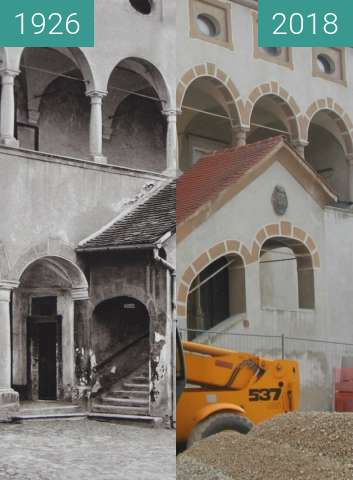
Paul von Eibiswald kaufte 1476 die inzwischen wieder landesfürstlich gewordene Burg. Seine Söhne wurden 1478 vom Kaiser damit belehnt. Georg von Eibiswald begann im letzten Viertel des 16. Jahrhunderts mit dem Bau des jetzigen Renaissance-Schlosses. 1594 war dieser beendet. Auf die Freiherren von Eibiswald folgten die Grafen Schrottenbach, dann die Herberstein und die Purgay. Ignaz Ernst von Purgay verkaufte das Schloss 1800 an Anton Franz Hoffer. 1820 gehörte es Johann Drasch und ab 1857 den Fürsten von Liechtenstein.
The first fortification on this site was probably built at the end of the 12th or the beginning of the 13th century. Burgstall was then under the control of the sovereign. Previously, it had likely belonged to the Eppenstein family.
The castle was originally called Lackenberg. In 1240, Frederick II gifted the castle to Kunigund, the daughter of the knight Albert von Purchstall. The estate is first mentioned in 1280. At that time, Ulrich Schenk von Rabenstein had given it to the Bishop of Seckau. In 1318, the bishopric granted the lordship to Rudolf von Tunau. Later, it belonged to the Wallsee family. In 1336, Konrad von Purchstall and his brother Frederick are mentioned as lords of the castle. Around the middle of the 14th century, the lordship was granted to the Wallsee family and administered by their burgraves.
Paul von Eibiswald purchased the castle, which had by then reverted to the sovereign's control, in 1476. His sons were enfeoffed with it by the emperor in 1478. Georg von Eibiswald began construction of the present Renaissance castle in the last quarter of the 16th century. It was completed in 1594. The Barons von Eibiswald were succeeded by the Counts of Schrottenbach, then the Herberstein family, and finally the Purgay family. Ignaz Ernst von Purgay sold the castle to Anton Franz Hoffer in 1800. In 1820, it belonged to Johann Drasch, and from 1857 onward, to the Princes of Liechtenstein.

Die erste Wehranlage an dieser Stelle war wohl Ende des 12. oder anfangs des 13. Jahrhunderts errichtet worden. Burgstall war damals landesfürstlich. Zuvor hatte es vermutlich den Eppensteinern gehört.
Die Burg hieß ursprünglich Lackenberg. 1240 schenkte Friedrich II die Burg Kunigund, der Tochter des Ritters Albert von Purchstall. 1280 wird der Ansitz erstmals erwähnt. Damals hatte ihn Ulrich Schenk von Rabenstein dem Bischof von Seckau übergeben. 1318 verlieh das Bistum die Herrschaft an Rudolf von Tunau. Später gehörte sie den Wallseern. 1336 werden als Burgherren Konrad von Purchstall und sein Bruder Friedrich erwähnt. Um die Mitte des 14. Jahrhunderts wurde die Herrschaft an die Wallseer verliehen und von deren Burggrafen verwaltet.
Paul von Eibiswald kaufte 1476 die inzwischen wieder landesfürstlich gewordene Burg. Seine Söhne wurden 1478 vom Kaiser damit belehnt. Georg von Eibiswald begann im letzten Viertel des 16. Jahrhunderts mit dem Bau des jetzigen Renaissance-Schlosses. 1594 war dieser beendet. Auf die Freiherren von Eibiswald folgten die Grafen Schrottenbach, dann die Herberstein und die Purgay. Ignaz Ernst von Purgay verkaufte das Schloss 1800 an Anton Franz Hoffer. 1820 gehörte es Johann Drasch und ab 1857 den Fürsten von Liechtenstein.
Nachdem das Land Steiermark 1954 das Schloss erworben hatte, richtete es darin eine landwirtschaftliche Haushaltungsschule für Mädchen ein. Heute ist eine Fachschule für Land- und Ernährungswirtschaft im Schloss untergebracht. © wehrbauten.at
The first fortification on this site was probably built at the end of the 12th or the beginning of the 13th century. Burgstall was then under the control of the sovereign. Previously, it had likely belonged to the Eppenstein family.
The castle was originally called Lackenberg. In 1240, Frederick II gifted the castle to Kunigund, the daughter of the knight Albert von Purchstall. The estate is first mentioned in 1280. At that time, Ulrich Schenk von Rabenstein had given it to the Bishop of Seckau. In 1318, the bishopric granted the lordship to Rudolf von Tunau. Later, it belonged to the Wallsee family. In 1336, Konrad von Purchstall and his brother Frederick are mentioned as lords of the castle. Around the middle of the 14th century, the lordship was granted to the Wallsee family and administered by their burgraves.
Paul von Eibiswald purchased the castle, which had by then reverted to the sovereign's control, in 1476. His sons were enfeoffed with it by the emperor in 1478. Georg von Eibiswald began construction of the present Renaissance castle in the last quarter of the 16th century. It was completed in 1594. The Barons von Eibiswald were succeeded by the Counts of Schrottenbach, then the Herberstein family, and finally the Purgay family. Ignaz Ernst von Purgay sold the castle to Anton Franz Hoffer in 1800. In 1820, it belonged to Johann Drasch, and from 1857 onward, to the Princes of Liechtenstein.
After the State of Styria acquired the castle in 1954, it established an agricultural domestic science school for girls. Today, the castle houses a vocational school for agriculture and food science. © wehrbauten.at