Das ursprüngliche Denkmal im heutigen Stadtpark von Franzensbad (Františkovy Lázně) wurde nach jahrelangen politischen Debatten im Juli 1927 als Gedenkstätte für die Gefallenen des Ersten Weltkriegs eingeweiht. Nachdem der Stadtrat das Projekt aus Kostengründen und politischen Vorbehalten zunächst blockiert hatte, sicherten private Spenden und ein Frühlingsfest des örtlichen Hausfrauenvereins im März 1926 die Finanzierung. Nach der Standortfestlegung im oberen Kurpark im Oktober 1926 erhielt das renommierte Duo aus dem Bildhauer Johann Adolf Mayerl und dem Architekten Oskar Sgustav den Entwurfs- und Bauauftrag.Mayerl und Sgustav brachten wertvolle Erfahrung in das Projekt ein, da sie erst kurz zuvor, im Februar 1926, gemeinsam den Wettbewerb für das Kriegerdenkmal im nordböhmischen Jirkov (Görkau) gewonnen hatten. Für Františkovy Lázně reichten die beiden Künstler zunächst einen Entwurf mit dem Titel „Die trauernde Witwe“ ein, der jedoch im Denkmalkomitee keine ausreichende Unterstützung fand. Erfolg hatte schließlich ihr zweiter, heroischerer Entwurf: Eine monumentale, drei Meter hohe Bronzestatue, die einen kräftig gebauten, nackten männlichen Krieger darstellte, der sich auf seine Schulter stützte und einen typisch deutschen Stahlhelm trug. Sgustav konzipierte die architektonische Einbindung, während Mayerl die plastische Ausführung übernahm. Da der Stadtrat die Freigabe des alten Sockels der zuvor entfernten Kaiser-Franz-I.-Statue verweigerte, mussten die Künstler ein komplett neues Fundament planen, dessen gärtnerische Gestaltung die Stadt übernahm.Das von Mayerl und Sgustav geschaffene Werk, das bei der Enthüllung am 24. Juli 1927 als „schönstes Denkmal Westböhmens“ gefeiert wurde, überstand den Zweiten Weltkrieg jedoch nicht. Frühestens 1941 wurde die markante Bronzefigur demontiert und für Kriegszwecke eingeschmolzen. Nach Jahren als leerer Sockel bauten antifaschistische Kämpfer das Areal 1953 radikal um. Der verbliebene Sockel wurde mit einer Opferschale, einer Urnennische und einem Zitat des kommunistischen Autors Julius Fučík versehen. Nach dem Ende des Staatssozialismus im Jahr 1990 wurden diese Inschriften verdeckt, womit das Denkmal seine offizielle Bedeutung verlor.
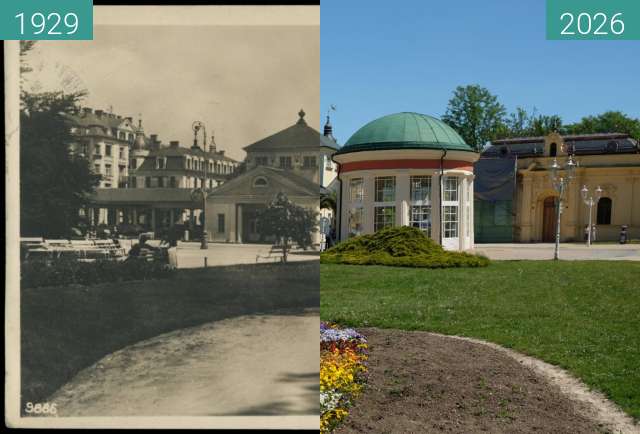
„Quelle des historischen Bildes: Städtisches Museum Franzensbad/Městské muzeum Františkovy Lázně“
The original monument in what is now the town park of Franzensbad (Františkovy Lázně) was inaugurated in July 1927, after years of political debate, as a memorial to the fallen of the First World War. After the town council initially blocked the project due to cost concerns and political reservations, private donations and a spring festival organized by the local housewives' association in March 1926 secured the necessary funding. Following the selection of the site in the upper spa park in October 1926, the renowned duo of sculptor Johann Adolf Mayerl and architect Oskar Sgustav were commissioned to design and construct the monument. Mayerl and Sgustav brought valuable experience to the project, having just recently, in February 1926, jointly won the competition for the war memorial in Jirkov (Görkau) in northern Bohemia. For Františkovy Lázně, the two artists initially submitted a design entitled "The Mourning Widow," which, however, did not receive sufficient support from the memorial committee. Their second, more heroic design was ultimately successful: a monumental, three-meter-high bronze statue depicting a powerfully built, naked male warrior leaning on his shoulder and wearing a typical German steel helmet. Sgustav conceived the architectural integration, while Mayerl was responsible for the sculptural execution. Since the city council refused to release the old pedestal of the previously removed statue of Emperor Franz I, the artists had to design a completely new foundation, the landscaping of which was undertaken by the city. The work created by Mayerl and Sgustav, which was celebrated as "the most beautiful monument in Western Bohemia" at its unveiling on July 24, 1927, did not survive the Second World War. The striking bronze figure was dismantled and melted down for the war effort no earlier than 1941. After years as an empty pedestal, anti-fascist activists radically redesigned the area in 1953. The remaining base was adorned with an offering bowl, an urn niche, and a quote from the communist author Julius Fučík. After the end of state socialism in 1990, these inscriptions were covered up, thus rendering the monument officially obsolete.
"Source of the historical image: Františkovy Lázně Municipal Museum"

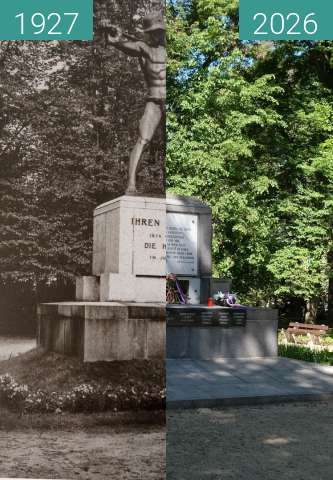
Das ursprüngliche Denkmal im heutigen Stadtpark von Franzensbad (Františkovy Lázně) wurde nach jahrelangen politischen Debatten im Juli 1927 als Gedenkstätte für die Gefallenen des Ersten Weltkriegs eingeweiht. Nachdem der Stadtrat das Projekt aus Kostengründen und politischen Vorbehalten zunächst blockiert hatte, sicherten private Spenden und ein Frühlingsfest des örtlichen Hausfrauenvereins im März 1926 die Finanzierung. Nach der Standortfestlegung im oberen Kurpark im Oktober 1926 erhielt das renommierte Duo aus dem Bildhauer Johann Adolf Mayerl und dem Architekten Oskar Sgustav den Entwurfs- und Bauauftrag.Mayerl und Sgustav brachten wertvolle Erfahrung in das Projekt ein, da sie erst kurz zuvor, im Februar 1926, gemeinsam den Wettbewerb für das Kriegerdenkmal im nordböhmischen Jirkov (Görkau) gewonnen hatten. Für Františkovy Lázně reichten die beiden Künstler zunächst einen Entwurf mit dem Titel „Die trauernde Witwe“ ein, der jedoch im Denkmalkomitee keine ausreichende Unterstützung fand. Erfolg hatte schließlich ihr zweiter, heroischerer Entwurf: Eine monumentale, drei Meter hohe Bronzestatue, die einen kräftig gebauten, nackten männlichen Krieger darstellte, der sich auf seine Schulter stützte und einen typisch deutschen Stahlhelm trug. Sgustav konzipierte die architektonische Einbindung, während Mayerl die plastische Ausführung übernahm. Da der Stadtrat die Freigabe des alten Sockels der zuvor entfernten Kaiser-Franz-I.-Statue verweigerte, mussten die Künstler ein komplett neues Fundament planen, dessen gärtnerische Gestaltung die Stadt übernahm.Das von Mayerl und Sgustav geschaffene Werk, das bei der Enthüllung am 24. Juli 1927 als „schönstes Denkmal Westböhmens“ gefeiert wurde, überstand den Zweiten Weltkrieg jedoch nicht. Frühestens 1941 wurde die markante Bronzefigur demontiert und für Kriegszwecke eingeschmolzen. Nach Jahren als leerer Sockel bauten antifaschistische Kämpfer das Areal 1953 radikal um. Der verbliebene Sockel wurde mit einer Opferschale, einer Urnennische und einem Zitat des kommunistischen Autors Julius Fučík versehen. Nach dem Ende des Staatssozialismus im Jahr 1990 wurden diese Inschriften verdeckt, womit das Denkmal seine offizielle Bedeutung verlor.
„Quelle des historischen Bildes: Städtisches Museum Franzensbad/Městské muzeum Františkovy Lázně“
The original monument in what is now the town park of Franzensbad (Františkovy Lázně) was inaugurated in July 1927, after years of political debate, as a memorial to the fallen of the First World War. After the town council initially blocked the project due to cost concerns and political reservations, private donations and a spring festival organized by the local housewives' association in March 1926 secured the necessary funding. Following the selection of the site in the upper spa park in October 1926, the renowned duo of sculptor Johann Adolf Mayerl and architect Oskar Sgustav were commissioned to design and construct the monument. Mayerl and Sgustav brought valuable experience to the project, having just recently, in February 1926, jointly won the competition for the war memorial in Jirkov (Görkau) in northern Bohemia. For Františkovy Lázně, the two artists initially submitted a design entitled "The Mourning Widow," which, however, did not receive sufficient support from the memorial committee. Their second, more heroic design was ultimately successful: a monumental, three-meter-high bronze statue depicting a powerfully built, naked male warrior leaning on his shoulder and wearing a typical German steel helmet. Sgustav conceived the architectural integration, while Mayerl was responsible for the sculptural execution. Since the city council refused to release the old pedestal of the previously removed statue of Emperor Franz I, the artists had to design a completely new foundation, the landscaping of which was undertaken by the city. The work created by Mayerl and Sgustav, which was celebrated as "the most beautiful monument in Western Bohemia" at its unveiling on July 24, 1927, did not survive the Second World War. The striking bronze figure was dismantled and melted down for the war effort no earlier than 1941. After years as an empty pedestal, anti-fascist activists radically redesigned the area in 1953. The remaining base was adorned with an offering bowl, an urn niche, and a quote from the communist author Julius Fučík. After the end of state socialism in 1990, these inscriptions were covered up, thus rendering the monument officially obsolete.
"Source of the historical image: Františkovy Lázně Municipal Museum"