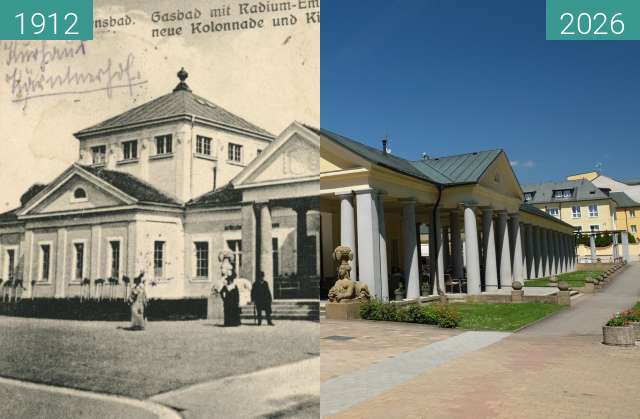
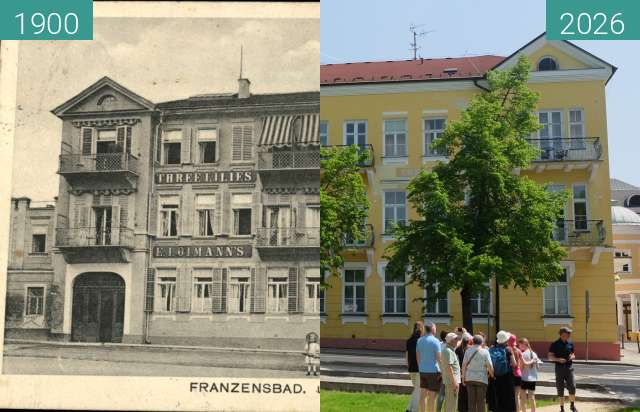
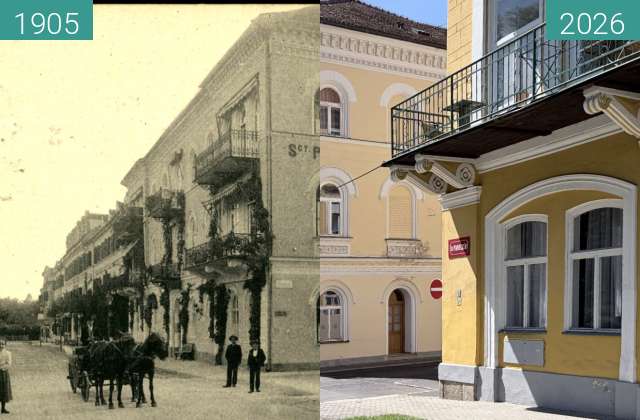
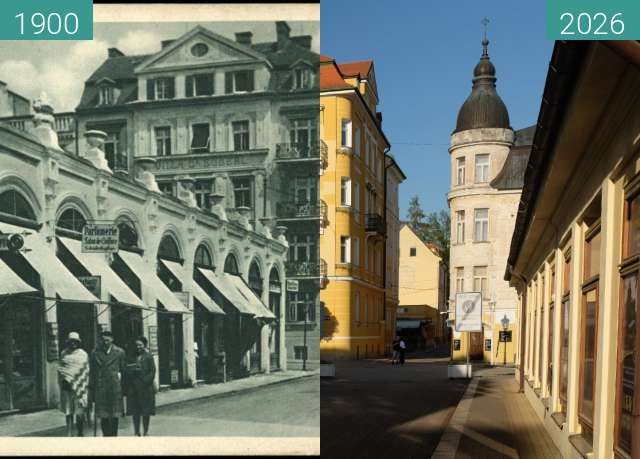
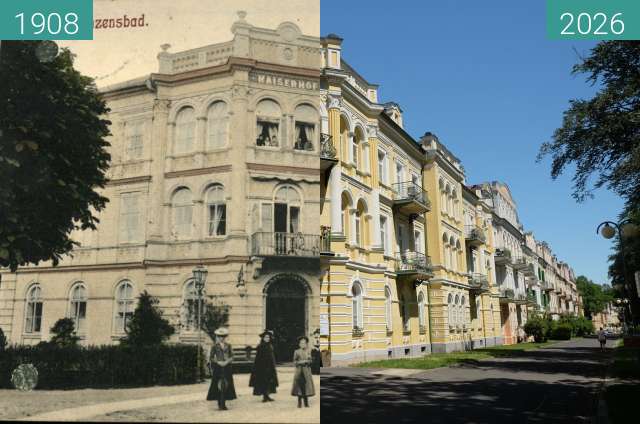
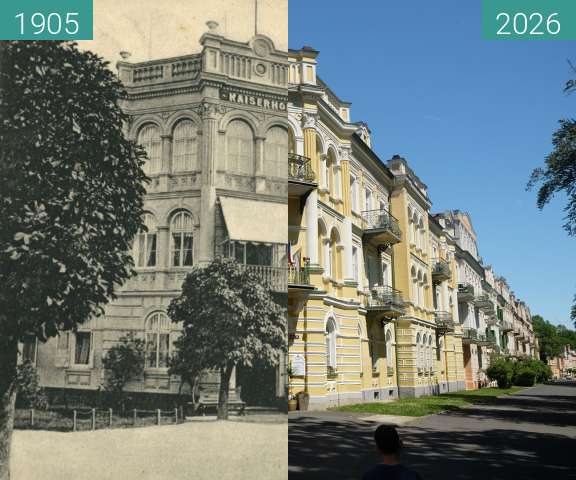
Franzensbad (Františkovy Lázně) bildet zusammen mit Karlsbad (Karlovy Vary) und Marienbad (Mariánské Lázně) das weltberühmte Böhmische Bäderdreieck. Die "Weltbühne Europas": Im 19. und frühen 20. Jahrhundert traf sich hier die europäische Hautevolee, darunter Kaiser, Könige, Denker und Künstler wie Goethe und Beethoven. Während Karlsbad pompös-monumental auftritt und Marienbad durch barocke Verspieltheit glänzt, bewahrte sich Franzensbad eine klassizistische, schachbrettartige Ruhe im typischen kaiserlichen „Schönbrunner Gelb“.
Die Franzensquelle ist das unangefochtene Herzstück, die älteste Heilquelle und der Namensgeber von Franzensbad. Sie befindet sich direkt im historischen Zentrum am Rande des Kurparks. Die Quelle war schon im Mittelalter unter Namen wie Egerbrunnen bekannt. Um diesen Brunnen herum wurde ab 1793 die planmäßige Kurstadt errichtet.Prominente Gäste: Fast jeder historische Kurgast trank hier. Viele Besucher – darunter auch Johann Wolfgang von Goethe – verglichen den prickelnden, kohlensäure- und mineralstoffreichen Geschmack der Quelle scherzhaft mit Champagner. Das stark kohlensäurehaltige, eisen- und sulfatreiche Wasser wird vor allem für Trinkkuren bei allgemeiner Schwäche, Erschöpfung und leichten Verdauungsstörungen eingesetzt. Die Quelle wird von einem wunderschönen, kreisrunden Empire-Pavillon (Rondell) aus dem Jahr 1832 überdacht. Er ersetzte damals das erste hölzerne Quellhaus, das hier 1791 als Hygienemaßnahme errichtet worden war. Der Pavillon besticht durch seine leuchtend gelbe Farbe, die weißen klassizistischen Säulen und eine markante Kuppel, die zu den meistfotografierten Motiven Westböhmens gehört.
Franzensbad (Františkovy Lázně), together with Karlovy Vary (Carlsbad) and Mariánské Lázně (Marienbad), forms the world-famous Bohemian Spa Triangle.
The "World Stage of Europe": In the 19th and early 20th centuries, Europe's elite gathered here, including emperors, kings, thinkers, and artists such as Goethe and Beethoven. While Karlovy Vary presents itself in a pompous and monumental style, and Mariánské Lázně shines with Baroque playfulness, Franzensbad has maintained a classical, checkerboard-like tranquility in the typical imperial "Schönbrunn yellow."
The Franzensquelle (Franzens Spring) is the undisputed centerpiece, the oldest healing spring, and the namesake of Franzensbad. It is located directly in the historic center on the edge of the spa park. The spring was already known in the Middle Ages under names such as Egerbrunnen (Eger Spring). The planned spa town was built around this spring starting in 1793. Prominent guests: Almost every historical spa visitor drank here. Many visitors – including Johann Wolfgang von Goethe – jokingly compared the sparkling, carbonated, and mineral-rich taste of the spring to champagne. The highly carbonated, iron- and sulfate-rich water is primarily used for drinking cures to treat general weakness, exhaustion, and minor digestive problems.
The spring is covered by a beautiful, circular Empire-style pavilion (rondel) dating from 1832. It replaced the first wooden spring house, which had been built here in 1791 as a hygiene measure.
The pavilion is striking with its bright yellow color, white neoclassical columns, and a distinctive dome, which is among the most photographed motifs in Western Bohemia.

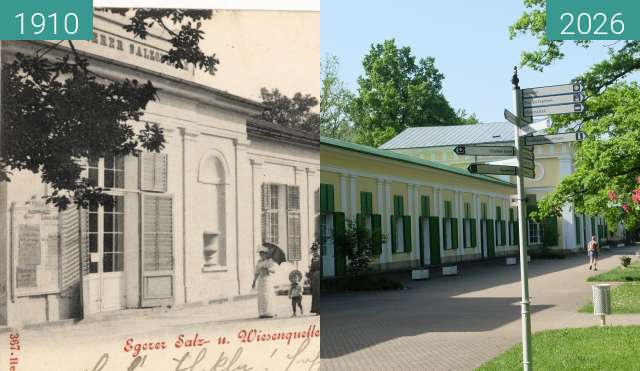
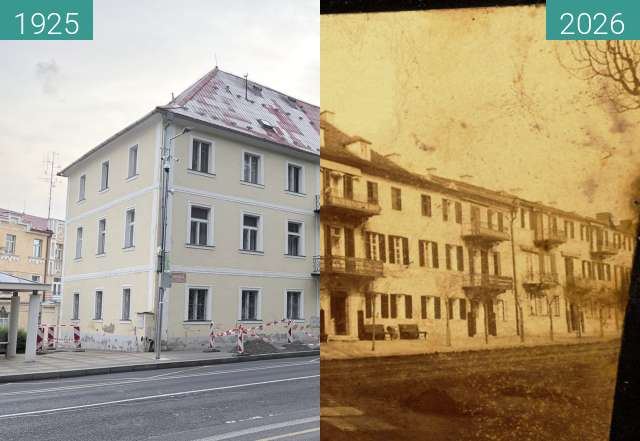
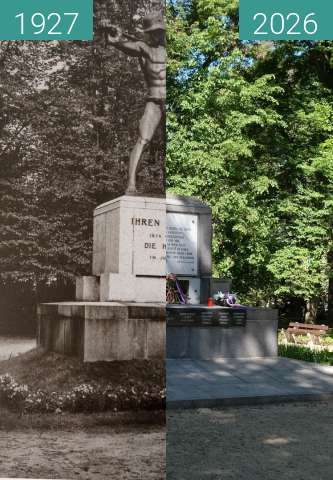
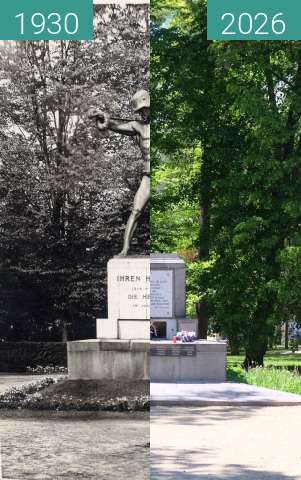
Franzensbad (Františkovy Lázně) bildet zusammen mit Karlsbad (Karlovy Vary) und Marienbad (Mariánské Lázně) das weltberühmte Böhmische Bäderdreieck.
Die "Weltbühne Europas": Im 19. und frühen 20. Jahrhundert traf sich hier die europäische Hautevolee, darunter Kaiser, Könige, Denker und Künstler wie Goethe und Beethoven. Während Karlsbad pompös-monumental auftritt und Marienbad durch barocke Verspieltheit glänzt, bewahrte sich Franzensbad eine klassizistische, schachbrettartige Ruhe im typischen kaiserlichen „Schönbrunner Gelb“.
Die Franzensquelle ist das unangefochtene Herzstück, die älteste Heilquelle und der Namensgeber von Franzensbad. Sie befindet sich direkt im historischen Zentrum am Rande des Kurparks. Die Quelle war schon im Mittelalter unter Namen wie Egerbrunnen bekannt. Um diesen Brunnen herum wurde ab 1793 die planmäßige Kurstadt errichtet.Prominente Gäste: Fast jeder historische Kurgast trank hier. Viele Besucher – darunter auch Johann Wolfgang von Goethe – verglichen den prickelnden, kohlensäure- und mineralstoffreichen Geschmack der Quelle scherzhaft mit Champagner. Das stark kohlensäurehaltige, eisen- und sulfatreiche Wasser wird vor allem für Trinkkuren bei allgemeiner Schwäche, Erschöpfung und leichten Verdauungsstörungen eingesetzt.
Die Quelle wird von einem wunderschönen, kreisrunden Empire-Pavillon (Rondell) aus dem Jahr 1832 überdacht. Er ersetzte damals das erste hölzerne Quellhaus, das hier 1791 als Hygienemaßnahme errichtet worden war.
Der Pavillon besticht durch seine leuchtend gelbe Farbe, die weißen klassizistischen Säulen und eine markante Kuppel, die zu den meistfotografierten Motiven Westböhmens gehört.
Bildquelle: Österreichische Nationalbibliothek / AKON
Franzensbad (Františkovy Lázně), together with Karlovy Vary (Carlsbad) and Mariánské Lázně (Marienbad), forms the world-famous Bohemian Spa Triangle.
The "World Stage of Europe": In the 19th and early 20th centuries, Europe's elite gathered here, including emperors, kings, thinkers, and artists such as Goethe and Beethoven. While Karlovy Vary presents itself in a pompous and monumental style, and Mariánské Lázně shines with Baroque playfulness, Franzensbad has maintained a classical, checkerboard-like tranquility in the typical imperial "Schönbrunn yellow."
The Franzensquelle (Franzens Spring) is the undisputed centerpiece, the oldest healing spring, and the namesake of Franzensbad. It is located directly in the historic center on the edge of the spa park. The spring was already known in the Middle Ages under names such as Egerbrunnen (Eger Spring). The planned spa town was built around this spring starting in 1793. Prominent guests: Almost every historical spa visitor drank here. Many visitors – including Johann Wolfgang von Goethe – jokingly compared the sparkling, carbonated, and mineral-rich taste of the spring to champagne. The highly carbonated, iron- and sulfate-rich water is primarily used for drinking cures to treat general weakness, exhaustion, and minor digestive problems.
The spring is covered by a beautiful, circular Empire-style pavilion (rondel) dating from 1832. It replaced the first wooden spring house, which had been built here in 1791 as a hygiene measure.
The pavilion is striking with its bright yellow color, white neoclassical columns, and a distinctive dome, which is among the most photographed motifs in Western Bohemia.
Image source: Austrian National Library / AKON