Diese Straße verdankt ihren Namen der Zeile aus repräsentativen Kurhäusern und Hotels entlang ihres Verlaufes. Sie war exakt so ausgerichtet, dass sie die Morgensonne (Osten/Nordosten) voll einfing. Für die Kurgäste gehörte die Morgenpromenade im ersten Tageslicht zum festen Ritual der Trinkkur. Heute heißt die Straße "Dr. Pohoreckeho".
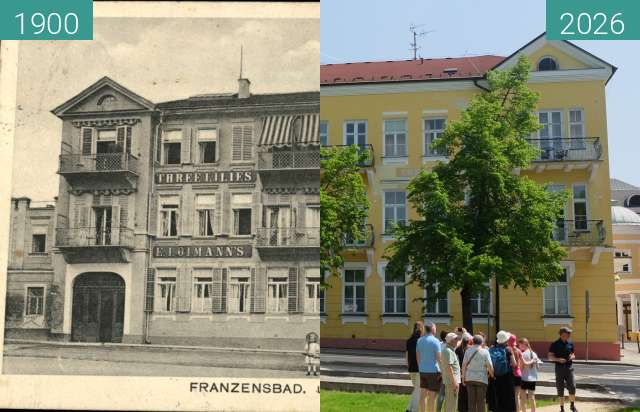
Wie viele andere herrschaftliche Gebäude in Franzensbad trug auch dieses Haus den Namen einer europäischen Metropole, um den internationalen Anspruch und die Herkunft der zahlungskräftigen Hautevolee widerzuspiegeln. Das Haus „St. Petersburg“ war ein erstklassiges, klassizistisches Kur- und Logierhaus direkt an der Morgenzeile. Es diente im 19. und frühen 20. Jahrhundert als feste noble Adresse für den internationalen Hochadel. Das russische Erbe im Kurbad: Der Name war kein Zufall. Vor allem das russische Zarenreich und der Adel aus Sankt Petersburg stellten über Jahrzehnte ein Kernklientel des Westböhmischen Bäderdreiecks. Unweit des Hauses und der Straße zeugt davon noch heute die prachtvolle russisch-orthodoxe Heilige-Olga-Kirche. Das Haus „St. Petersburg“ steht exemplarisch für diese Epoche, in der die Morgenzeile als „Fenster zur Welt“ galt, an dem Diplomaten, Künstler und Fürsten logierten.
This street owes its name to the row of grand spa buildings and hotels lining its length. It was precisely oriented to capture the full morning sun (east/northeast). For spa guests, the morning promenade in the first light of day was an integral part of their drinking cure ritual. Today, the street is called "Dr. Pohoreckeho."
Like many other stately buildings in Františkovy Lázně (Franzensbad), this building also bore the name of a European metropolis to reflect the international aspirations and origins of the affluent upper class.
The "St. Petersburg" building was a first-class, neoclassical spa and lodging house located directly on the morning promenade. In the 19th and early 20th centuries, it served as a prestigious address for the international aristocracy.
The Russian heritage in the spa town: The name was no coincidence. For decades, the Russian Empire and the nobility from St. Petersburg constituted a core clientele of the West Bohemian Spa Triangle. Not far from the house and the street, the magnificent Russian Orthodox Church of St. Olga still bears witness to this era. The "St. Petersburg" house is a prime example of this period, when the Morgenzeile was considered a "window to the world," where diplomats, artists, and princes stayed.

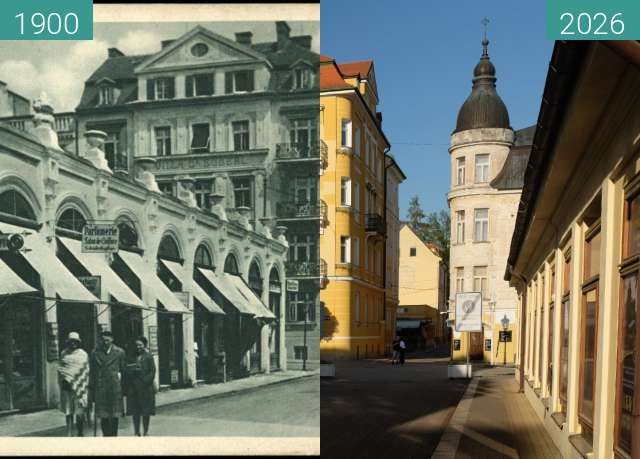
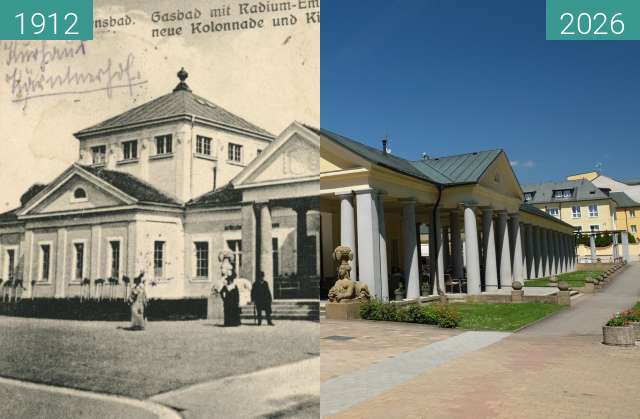
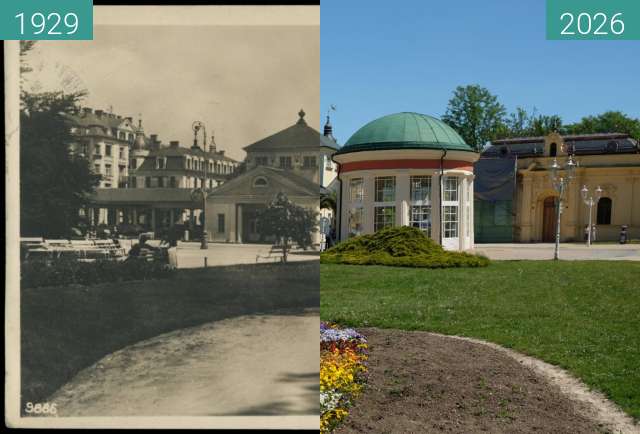
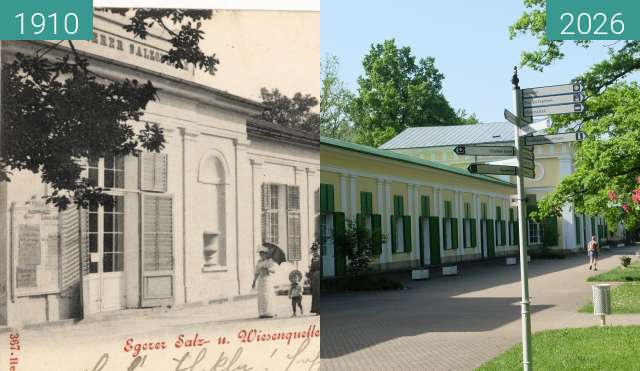
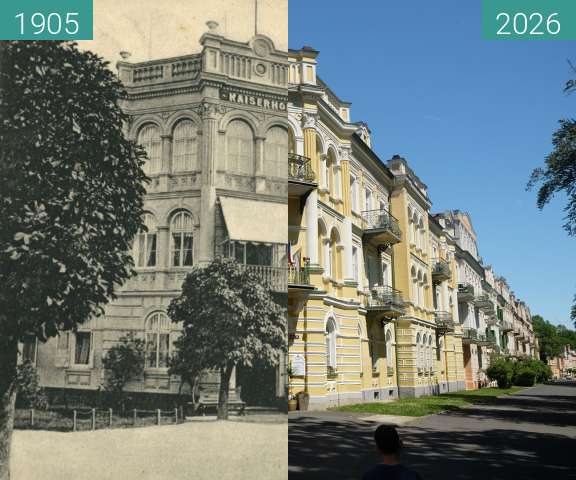
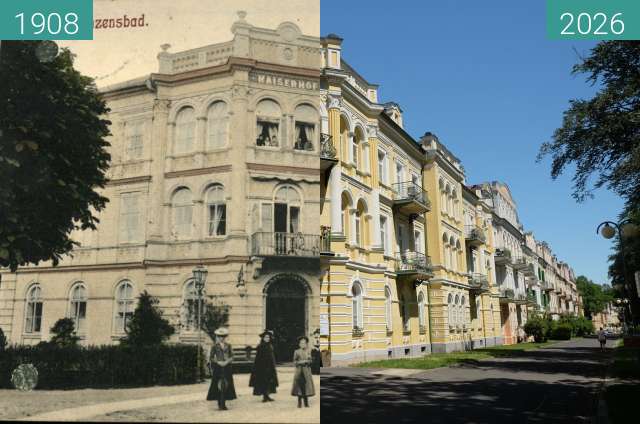
Diese Straße verdankt ihren Namen der Zeile aus repräsentativen Kurhäusern und Hotels entlang ihres Verlaufes. Sie war exakt so ausgerichtet, dass sie die Morgensonne (Osten/Nordosten) voll einfing. Für die Kurgäste gehörte die Morgenpromenade im ersten Tageslicht zum festen Ritual der Trinkkur. Heute heißt die Straße "Dr. Pohoreckeho".
Wie viele andere herrschaftliche Gebäude in Franzensbad trug auch dieses Haus den Namen einer europäischen Metropole, um den internationalen Anspruch und die Herkunft der zahlungskräftigen Hautevolee widerzuspiegeln.
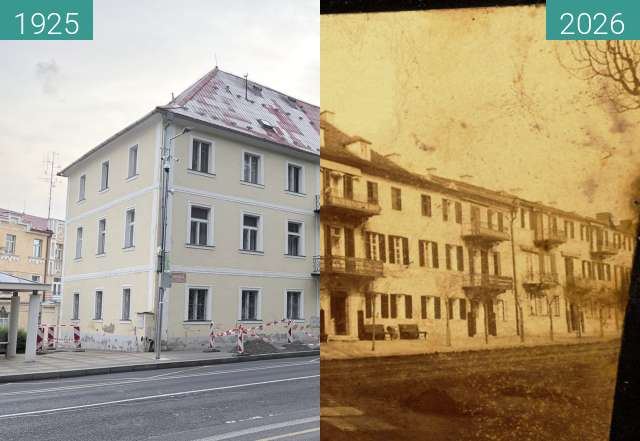
Das Haus „St. Petersburg“ war ein erstklassiges, klassizistisches Kur- und Logierhaus direkt an der Morgenzeile. Es diente im 19. und frühen 20. Jahrhundert als feste noble Adresse für den internationalen Hochadel.
Das russische Erbe im Kurbad: Der Name war kein Zufall. Vor allem das russische Zarenreich und der Adel aus Sankt Petersburg stellten über Jahrzehnte ein Kernklientel des Westböhmischen Bäderdreiecks. Unweit des Hauses und der Straße zeugt davon noch heute die prachtvolle russisch-orthodoxe Heilige-Olga-Kirche. Das Haus „St. Petersburg“ steht exemplarisch für diese Epoche, in der die Morgenzeile als „Fenster zur Welt“ galt, an dem Diplomaten, Künstler und Fürsten logierten.
This street owes its name to the row of grand spa buildings and hotels lining its length. It was precisely oriented to capture the full morning sun (east/northeast). For spa guests, the morning promenade in the first light of day was an integral part of their drinking cure ritual. Today, the street is called "Dr. Pohoreckeho."
Like many other stately buildings in Františkovy Lázně (Franzensbad), this building also bore the name of a European metropolis to reflect the international aspirations and origins of the affluent upper class.
The "St. Petersburg" building was a first-class, neoclassical spa and lodging house located directly on the morning promenade. In the 19th and early 20th centuries, it served as a prestigious address for the international aristocracy.
The Russian heritage in the spa town: The name was no coincidence. For decades, the Russian Empire and the nobility from St. Petersburg constituted a core clientele of the West Bohemian Spa Triangle. Not far from the house and the street, the magnificent Russian Orthodox Church of St. Olga still bears witness to this era. The "St. Petersburg" house is a prime example of this period, when the Morgenzeile was considered a "window to the world," where diplomats, artists, and princes stayed.