The Quai des Laveuses on the banks of the Loing in Moret-sur-Loing. The name comes from the fact that, from the Middle Ages through the 20th century, women washed their laundry in the river here (as seen in the old photo). Today, tourists and locals alike come here to relax.
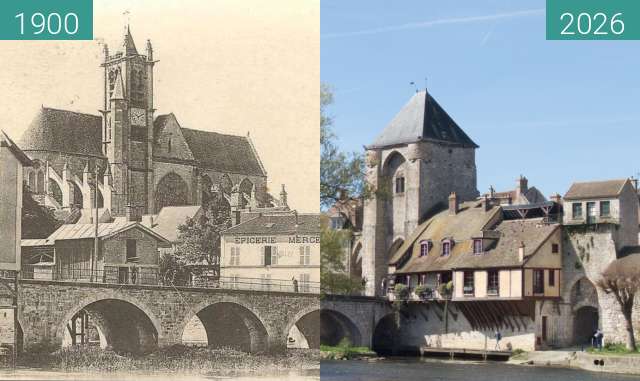
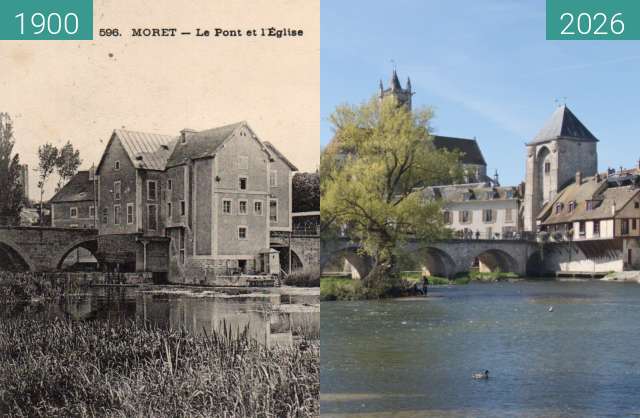
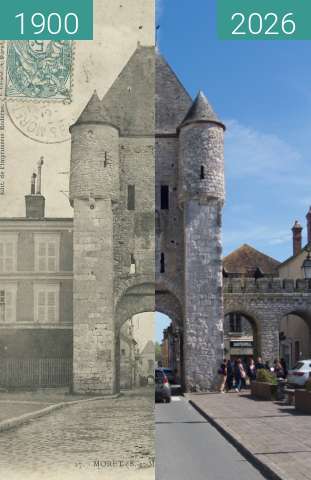
On the left are the remains of the medieval city wall, against which houses were built in close proximity (some dating from the 18th century). The large gate is the Porte de Bourgogne, which secured the city to the southeast (toward Burgundy, hence the name). On the right, you can see part of one of the old mills, many of which used to stand near the bridge. Over time, they were lost due to decay in the wake of industrialization and destruction during World War II. The bridge was also blown up but rebuilt after the war.

The Quai des Laveuses on the banks of the Loing in Moret-sur-Loing. The name comes from the fact that, from the Middle Ages through the 20th century, women washed their laundry in the river here (as seen in the old photo). Today, tourists and locals alike come here to relax.
On the left are the remains of the medieval city wall, against which houses were built in close proximity (some dating from the 18th century). The large gate is the Porte de Bourgogne, which secured the city to the southeast (toward Burgundy, hence the name). On the right, you can see part of one of the old mills, many of which used to stand near the bridge. Over time, they were lost due to decay in the wake of industrialization and destruction during World War II. The bridge was also blown up but rebuilt after the war.