The Église Notre-Dame de Moret and the Porte de Bourgogne in Moret-sur-Loing, viewed from the banks of the Loing.
The current bridge dates from 1852 and was built on the foundations of the medieval bridge. Many of the mills that had stood near the bridge until then were demolished in the process. During World War II, the bridge was blown up by the German army to slow the Allied advance.
The Porte de Bourgogne was built, like the church, in the 12th century under Philip Augustus. It faces southeast toward Burgundy, hence its name. Until the 15th century, Moret played an important role as a fortified town and a commercial hub.

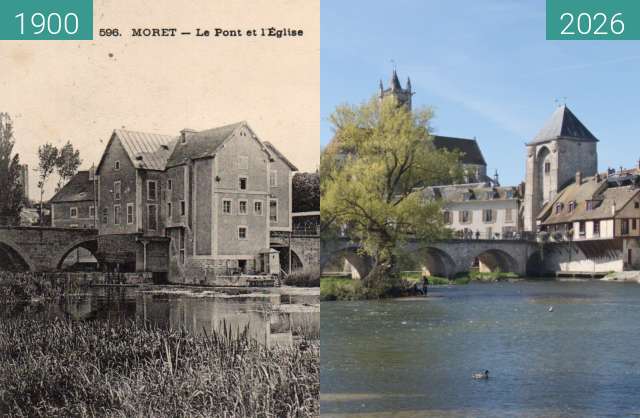
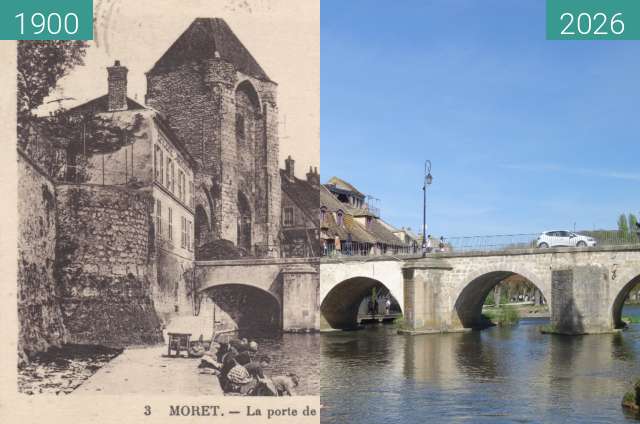
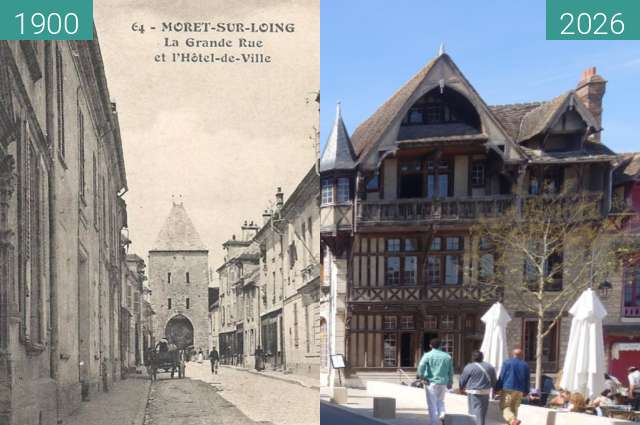
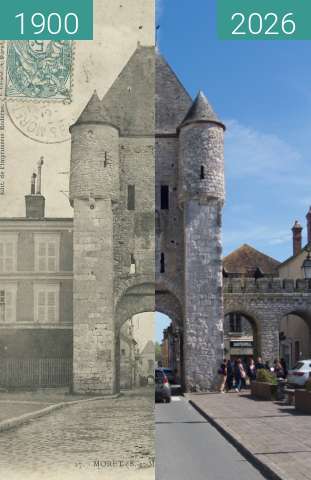
The Église Notre-Dame de Moret and the Porte de Bourgogne in Moret-sur-Loing, viewed from the banks of the Loing.
The current bridge dates from 1852 and was built on the foundations of the medieval bridge. Many of the mills that had stood near the bridge until then were demolished in the process. During World War II, the bridge was blown up by the German army to slow the Allied advance.
The Porte de Bourgogne was built, like the church, in the 12th century under Philip Augustus. It faces southeast toward Burgundy, hence its name. Until the 15th century, Moret played an important role as a fortified town and a commercial hub.