
The re.photos app is here!
Realized with the generous support of the Sievert Stiftung

Toll, dass du jetzt Asien abarbeitest! 😅
Great that you're now working your way through Asia! 😅

Haha, leider wird das kein echtes Abarbeiten, ich habe nicht viele alte Fotos gefunden in der Region. Aber hoffentlich komme ich dort in Zukuft noch mehr herum :)
Haha, unfortunately, this won't be a real cull; I didn't find many old photos from the region. But hopefully, I'll get to visit more places there in the future :)
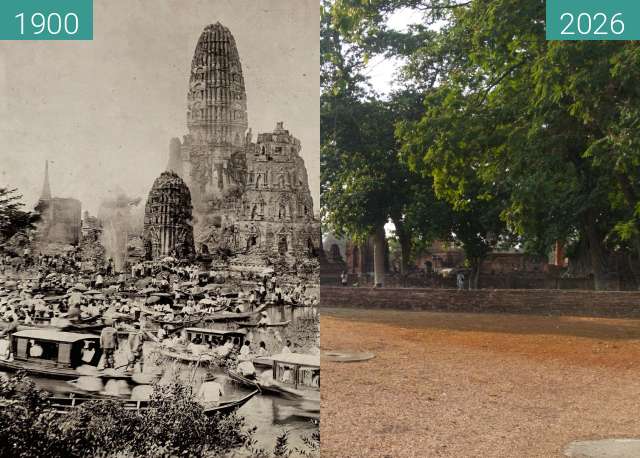
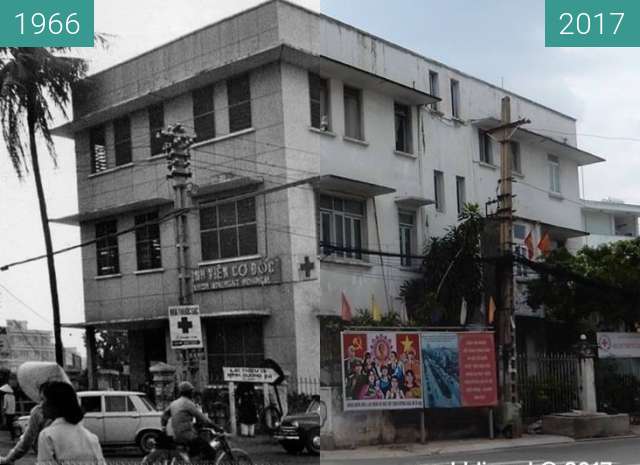
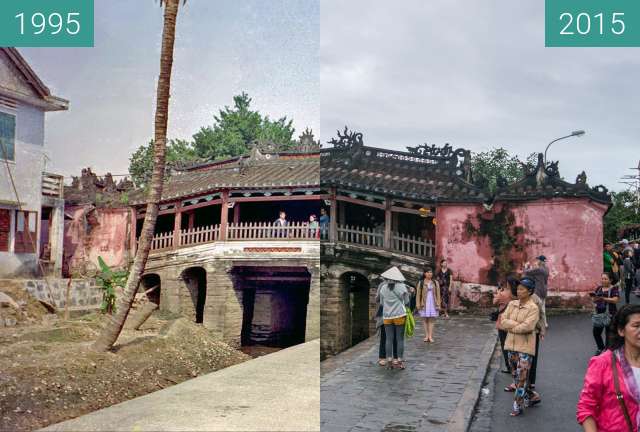
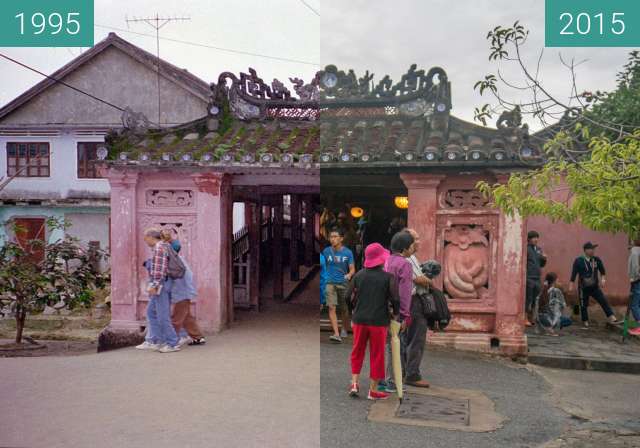
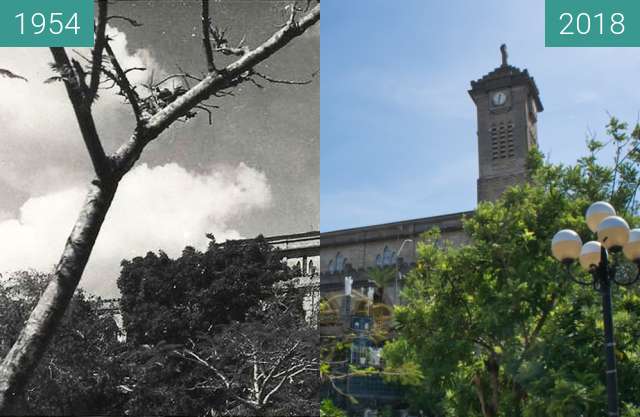
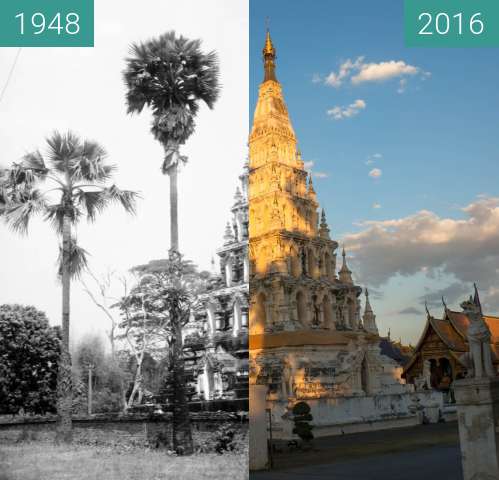
The temple of Angkor Wat in the former capital of the Khmer Empire (9th–15th centuries). It was built in the early 12th century by Suryavarman II as the official state temple and dedicated to the god Vishnu. Beginning in the late 13th century, it was gradually converted into a Buddhist temple.
After the Kingdom of Ayutthaya attacked Angkor in 1431, the Khmer capital was moved south, and many parts of the city of Angkor were abandoned. Angkor Wat, however, remained a Buddhist sanctuary throughout.
Starting in the mid-19th century, Angkor was explored by French researchers; their travel accounts made the temples famous in Europe as well. In 1863, France established a protectorate over Cambodia. In the years that followed, Angkor Wat and other temples in the region were restored by the École française d’Extrême-Orient.
The first photographs of Angkor were taken by the Scotsman John Thomson. Shortly thereafter, in 1866, Émile Gsell (1838–1879) joined an expedition and became the second photographer to document the temples of Angkor. He later returned to Angkor and other regions of Southeast Asia on several occasions. These travels ultimately proved to be his undoing: he died at the age of 40 from complications of a tropical fever.
The historical photograph shows that Angkor Wat was even more overgrown with vegetation at that time (although the temple was never completely engulfed by the jungle). Some of the sculptures visible at the entrance today, including lion figures and naga balustrades, were only re-erected during later restoration work.